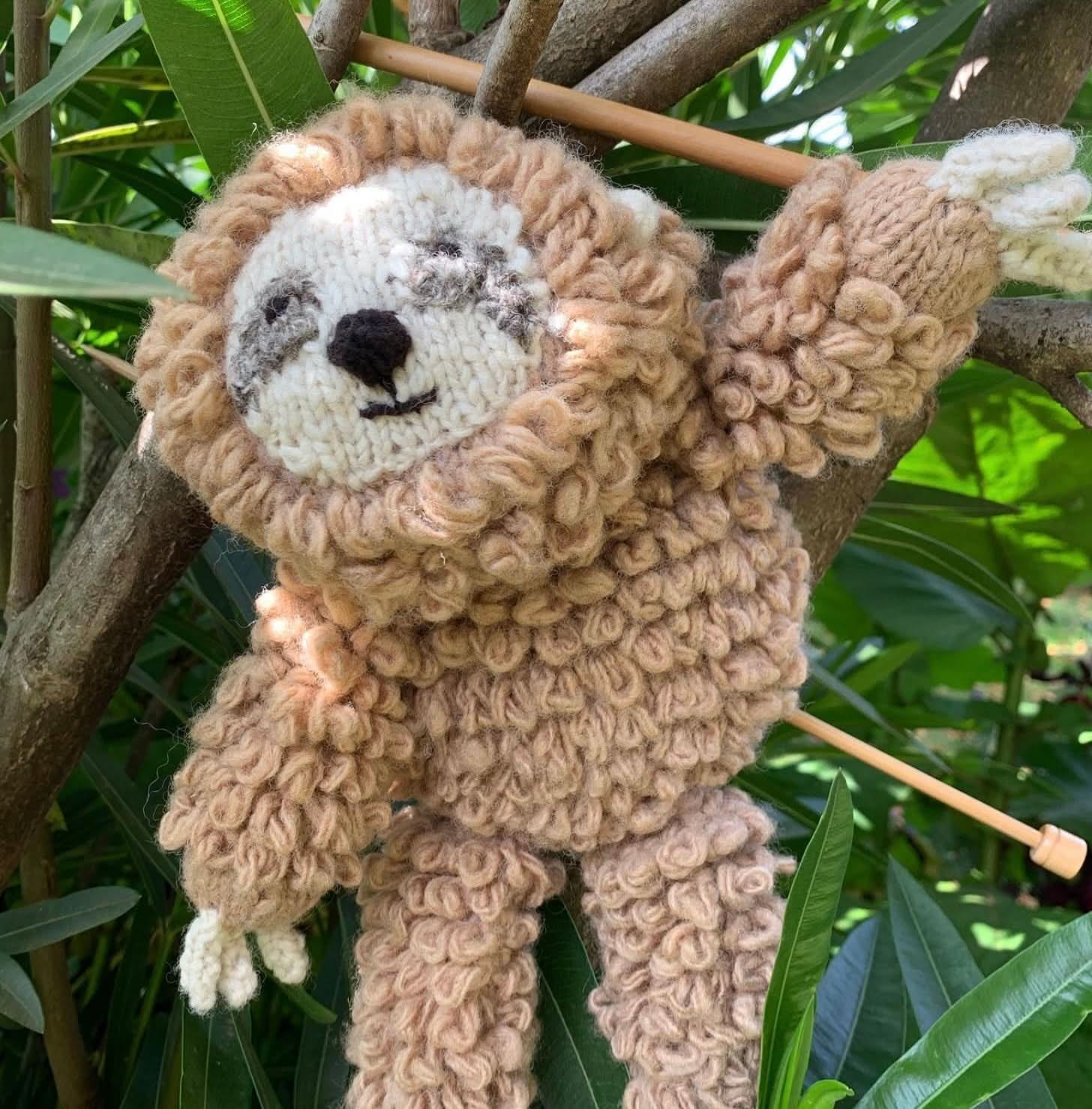
The cutest baby gift is a natural fiber plushie 🧸
How harmful are chemicals in plastic children's toys?

In today’s newsletter:
Silky Crunch Teddy Bear Matrix 🧸
How harmful are chemicals in plastic toys?
Free spreadsheet of 46 plushie brands (Rated Scrunchy or Crunchy, based on interior and exterior materials)
For paid readers: teddy bear review
You need a little gift for a new angel in your life. I can help!
Obviously, if the parents have a registry, pick from the registry. But if you’re lucky, after you’ve already gifted diaper cakes and booger straws… you’ll get a chance to pick up something special.
I like to have baby gifts on hand, especially when I find something good. For the longest time, it was this Jellycat octopus, first discovered on a coworker’s registry. (Although a rectal thermometer was the only registry item within budget, I splurged because I’m shy.) It was worth it: I was richly rewarded with the sweetest pic of Odell the Octopus on the baby’s head, tentacles like a wig.
But now that I know about how babies breathe in more indoor pollution compared to children or adults, I’m over Odell. She’s still adorable and would look great on a shelf though.
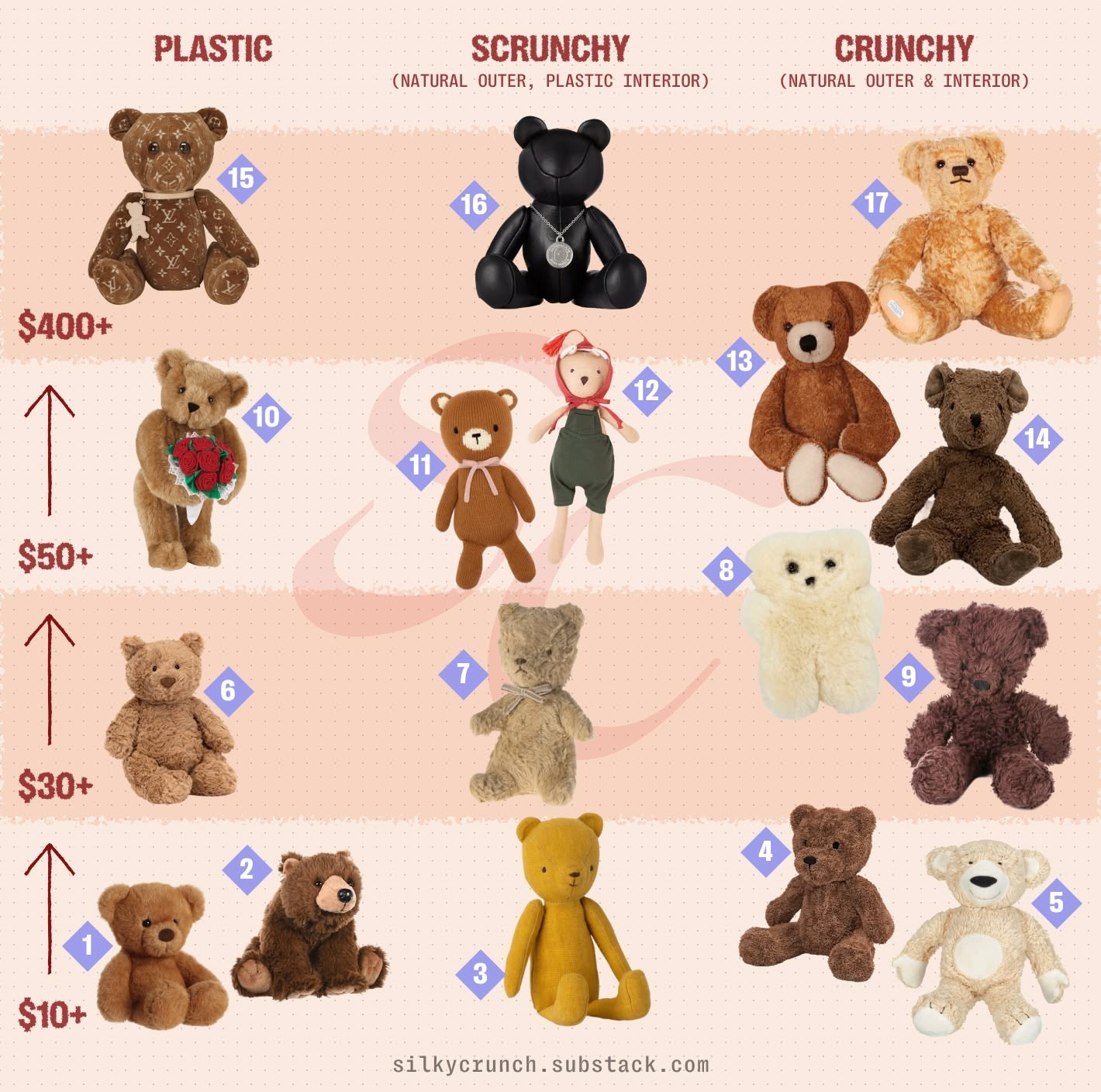
🧸 Silky Crunch Teddy Bear Matrix
Most brands have a universe of plushies. I picked the bears (rather than bunnies or sloths) for a casual comparison, just ‘cause most brands had a bear.
How harmful are chemicals in plastic toys?
There have been hundreds of studies in the past decade linking phthalate exposure on neurodevelopmental outcomes, synthetics in the bedroom to children’s allergies, and endocrine-disrupting, cancer-causing chemicals to children’s toys.
If you’ll only read one paper, this article “Chemicals of Concern in Plastic Toys” from 2021 does a decent job at touching on both the health and environmental impacts, with lots of references.
I enjoyed reading the different ways that researchers try to understand the exposure risks for children. After all, it wouldn’t be ethical to intentionally expose some children to bad chemicals in a control group. Aside from testing the toys themselves for contaminants, there was sampling residue on children’s hands with hand wipes, sampling feces, or indoor dust. One study from 2022 used “artificial saliva simulating 1 h of mouthing” to track the migration of hazardous contaminants.
My three takeaways:
Soft plastic (plushies) may be more dangerous than hard plastic (building blocks).
This was something surprising I encountered in multiple studies. A study from 2016 concluded:
“PBDEs migrate relatively easier from soft plastic toys compared to hard plastic toys, even if the harder plastic toys contain higher PBDE levels.”
The same study discovered:
“For the Belgian population, the exposure scenario from mouthing on toys containing PBDEs… was found to be lower than the exposure from mother's milk, but higher than the exposure through diet or even dust.”
Babies are especially vulnerable to the plastic plushies we put in their hands, compared to adults, because of their metabolic rate, surface area to body weight ratio, and growing organs and tissues.
It’s impossible to avoid toxins in toys made from recycled plastic. There are hazardous flame retardants in toys made of recycled plastic:
“As the risk of re-introducing unwanted/hazardous chemicals back to new consumer products exists, implementation of the circular economy for toy material production is rather challenging.”
Buy a virgin plastic toy if you must!
By the way, I’m not suggesting you yank away beloved toys from children! But adding a safer toy to the mix might reduce exposure to unwanted chemicals. Once toddlers are older, they stop exploring toys so close to the face or with their mouths. Swapping out less disruptive things like bedding might make more of a difference too.
Here’s the Google Spreadsheet of the 46 plushie toy brands I peeped, if you want to check your toys. I was pleasantly surprised to find so many organic, natural fiber plushies in the same price range as the popular plastic ones ($25-50).
Lovely bears I didn’t buy:
Naturepedic ($39-79) stuffed animals are organic cotton inside and out! Most are $39, but the teddy bear comes with a blanket and is $79. The turtle and penguin are very sweet.
Senger Naturwelt ($68-100) is made in Germany. The outer is cotton and the stuffing is new wool. While it is the epitome of Silky Crunch, he was out of our testing budget this time.
Maileg uses polyester filling (as opposed to cotton, wool, corn fiber, etc) which I just found out. Bummer! When I lived in Denmark, I bought a few dolls for my niece; the exteriors are cotton. Such sweet designs! Still a good gift for kids 3+ that are no longer exploring toys with their mouth.
Sigikid had a cute teddy bear for $50, with an organic cotton outer and lambswool stuffing. Unfortunately, he’s been sold out for months.
This newsletter contains affiliate links. I may earn some cents from items you buy, at no cost to you.
For paid readers— I found and purchased teddy bears made of natural fibers to test, two from each brand to check for quality and consistency.
Finn + Emma
The brand has the best plushies like Sam the Sloth ($39) that are knit with natural materials like wool and stuffed with GOTS-certified organic cotton.