

Don’t Get Fleeced By Synthetic Fleece
They’re pulling the wool over our eyes 🐑

Hi, it’s officially fall!
This is my favorite time of the year. I savor every last day of golden daylight, until it starts to feel crisp and chilly in the evenings. Though I’m still wearing t-shirts outside here in Brooklyn, I’m giddy to begin layering again…
A reader pointed out last week that the cozy fleece recommendation actually only ships to the UK and Europe! Womp womp.

To catch you up: synthetic fleece is one of the few plastic textiles I completely removed from my closet. Also known as Polartec, sherpa fleece, or teddy fleece, it’s usually spun from acrylic or polyethylene terephthalate (PET) and easily releases tiny fibers that are too small for our eyes to see, but can be inhaled or remain on your skin.
Ten years ago, Outside Magazine published an article titled, “The Invisible Nightmare In Your Fleece.” A year later, Patagonia commissioned a study on the effects of synthetic fleece on the outdoors, and the results were even worse compared to the first study:
“The study, performed by graduate students at the Bren School of Environmental Science and Management at the University of California, Santa Barbara, found that during laundering, a single fleece jacket sheds as many as 250,000 synthetic fibers.”
It’s a problem the industry has known about for decades, but the same brands continue to produce and sell synthetic fleece, even suggesting that the washing machine industry should be responsible for better filtering microfibers and plastics.
All that was even before we learned about the harmful effects of microplastics inhalation:
“chronic exposure to low concentrations of microplastics in the air could be associated with respiratory and cardiovascular diseases depending on an individual’s susceptibility and the particle characteristics.”
While researching natural fiber fleece on the market, I could not find a single American brand that uses non-plastic fleece. It’s so normalized here due to all the marketing and greenwashing of fleece made from PET bottles as “sustainable” or “vegan.”
It became clear that there are more consumers in Canada and Europe who care, whether for personal health or environmental reasons, since that’s where the natural fiber brands are staying in business.
By the way, the next letter will be on common greenwashing and health-washing tactics to look out for.
SILKY PICKS
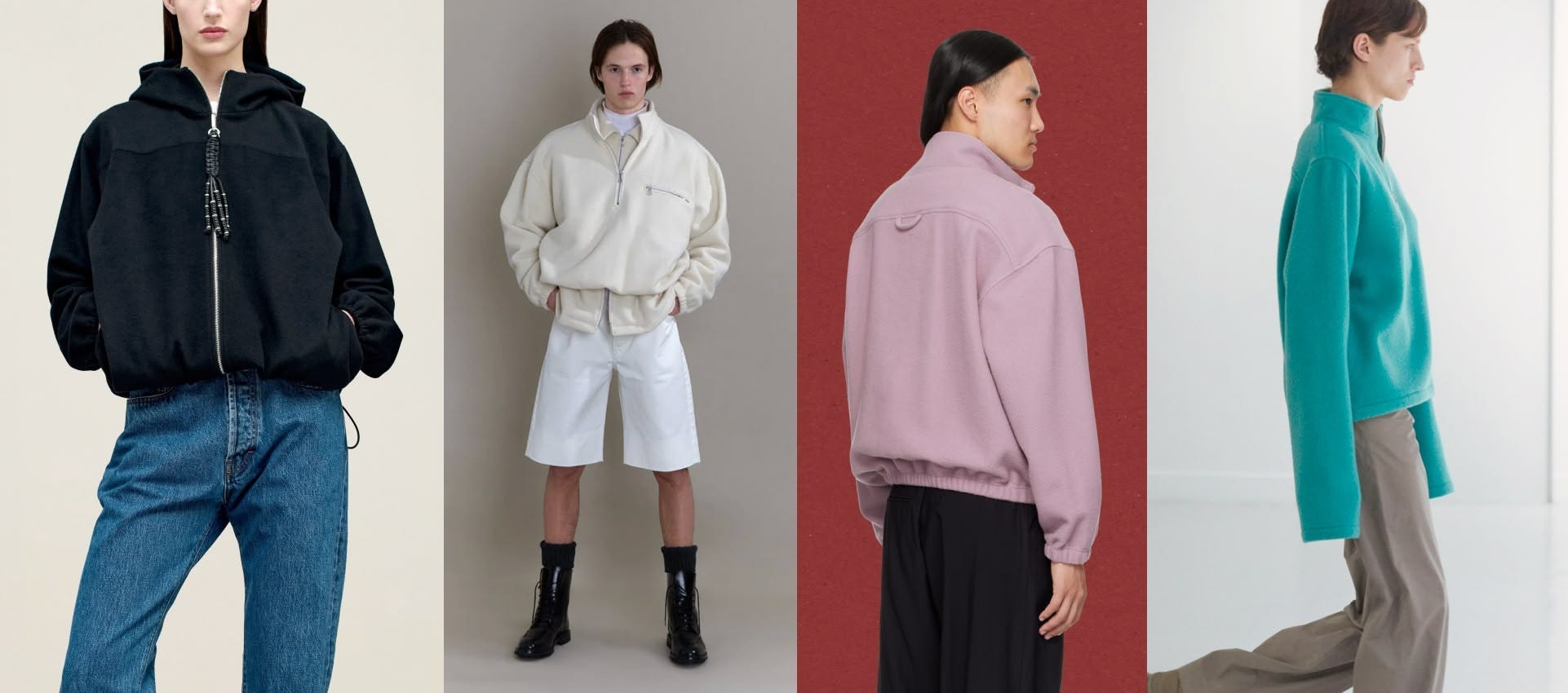
Kallmeyer wool fleece windbreaker ($1290) is a luxe update to the Northface Denali. Shipping within the US.
This Rier fleece is 100% wool and I’m obsessed with the shape! Crunchy at a very, very silky cost. Yes, a thousand euros, but the founder and designer spent 7 years designing for Prada so it’s basically Prada for less. Ships from the US, Canada, or Europe.
For reference, here’s a Miu Miu fleece for double the cost. 90% plastic, 10% wool…
SCRUNCHY PICKS

Wool-cotton zip-up silhouette I like for 200 euros, but it only ships to Euroland.
Teddy bear fleece is 100% wool on the outside, 100% cotton on the inside. Ships worldwide from the UK.
An elegant wool-cotton blend overshirt ($149) that functions like fleece: a lightweight but warm layer.
CRUNCHY PICKS
The following brands also have great children’s options, if you’re looking.
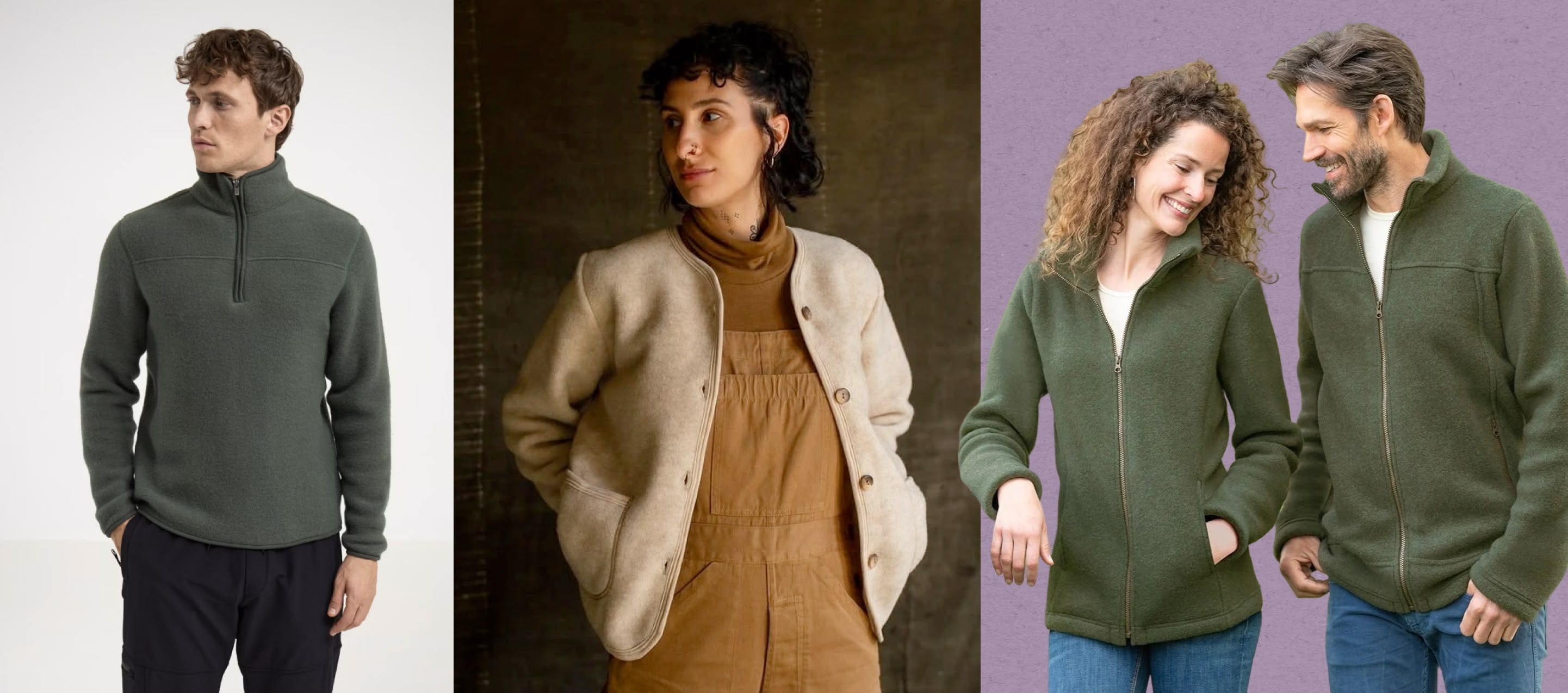
Dilling is a Danish brand I’ve trusted for basics, ever since I discovered it back when I lived in Copenhagen for grad school. They have a US outpost now, so it ships from the US or from Europe.
SISKIN 100% merino wool fleece in five natural colors. Ships worldwide from UK.
Warmth and Weather has children’s fleece that looks soo cozy and functional. Ships from Canada.
Silky Crunch may earn some cents if you purchase by clicking through some of the links in this letter. Thanks for your support!
Honorable Mentions
Not fleece, but Nour received this 100% regenerative wool zip hoodie as a gift from Sheep Inc. and loves it for work travel. I want it too, but the torso is long for shorties. Definitely measure before you order. (Code SILKY15 for 15% off) Ships from the UK.
Some of these 100% natural zip-ups are pricey, or perhaps not the style you prefer.
If you reach for polyester fleece often, switching from 100% to 40% synthetic can lower the dose of plastics by more than half— and it’s not only on your skin, but what you’re breathing in, or shedding on your other clothes when you do laundry. Below are some natural-synthetic blends:
This Bonobos cotton fleece (75% cotton, 20% lyocell, 5% elastane) only has 5% plastic, and looks less crunchy than the options from Dilling. ($109) Ships from the US.
Percival’s men’s jacket (70% wool fleece, 30% recycled polyester) looks so plush! ($315) Ships from the UK.
LL Bean’s ($110) zip-up fleece is 61% wool, 39% polyester. Multiple colors and a petite option! Ships from the US.
Don’t forget you can also look secondhand. A Depop find: an Outdoor Voices fleece that’s 63% wool, for just $49. For search terms, try “boiled wool zip-up” and “wool fleece” or “cotton fleece.”
If you’re breaking up with synthetic fleece, I hope this was helpful 🫶 And I’d love to know:
That Miu Miu fleece is insane. How can they, in good conscience price 90% polyester at over $2k!? This continues to show how much the industry is really broken.
Recently I have been thinking about detoxing my home, but it’s difficult. Like for example, I owned two fleece jackets, and i’ve had them for a long time, I usually buy and hold haha but now I wanna get rid of them knowing they are bad for you and the environment, what should I do? Just throw them in the bin, but that’s bad for the environment too… if I donate them, then I am just passing my problem to other people who is unaware of the harm. Like how did you do it? Desperately looking for advice.